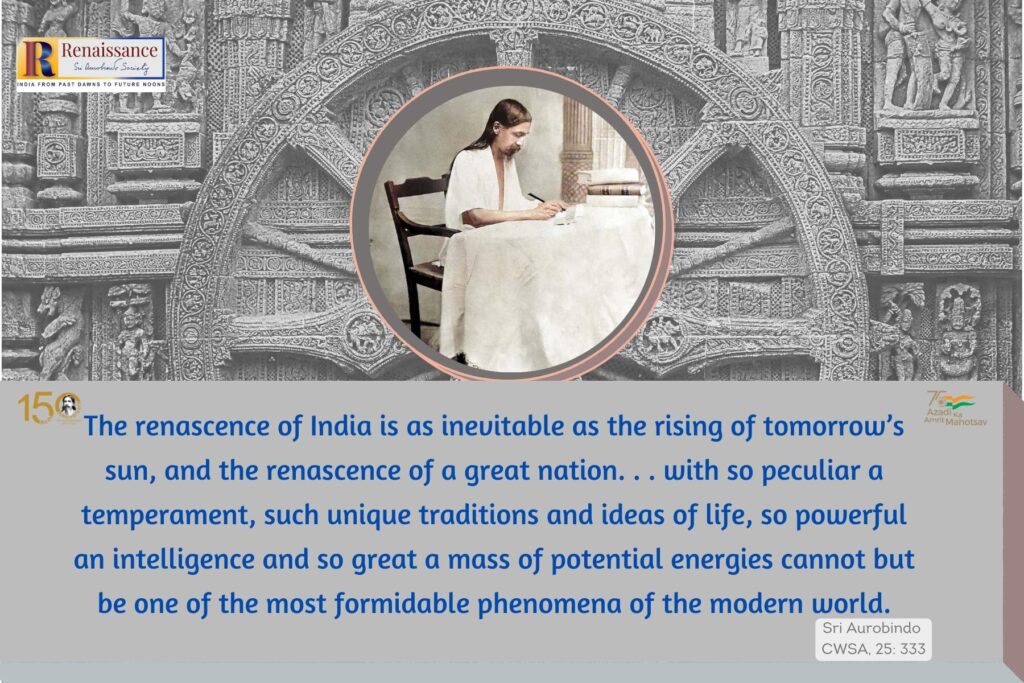
Sri Aurobindo and Indian Cultural Renaissance – 2
The author mentions a few attempts at cultural rejuvenation of India which seem to lack the very central springs of Indian culture.
Sri Aurobindo and Indian Cultural Renaissance – 2 Read More »

The author mentions a few attempts at cultural rejuvenation of India which seem to lack the very central springs of Indian culture.
Sri Aurobindo and Indian Cultural Renaissance – 2 Read More »
Is Sri Aurobindo a mere revivalist, or a proud nationalist who glories in the past? Is he merely an enthusiastic exponent of Indian culture? Read on.
Sri Aurobindo and Indian Cultural Renaissance – 3 Read More »
The author reminds that Sri Aurobindo wants free India to accept boldly the challenge of the age and give the world a lead in solving problems of collective life by applying her spiritual ideals.
Sri Aurobindo and Indian Cultural Renaissance – 4 Read More »
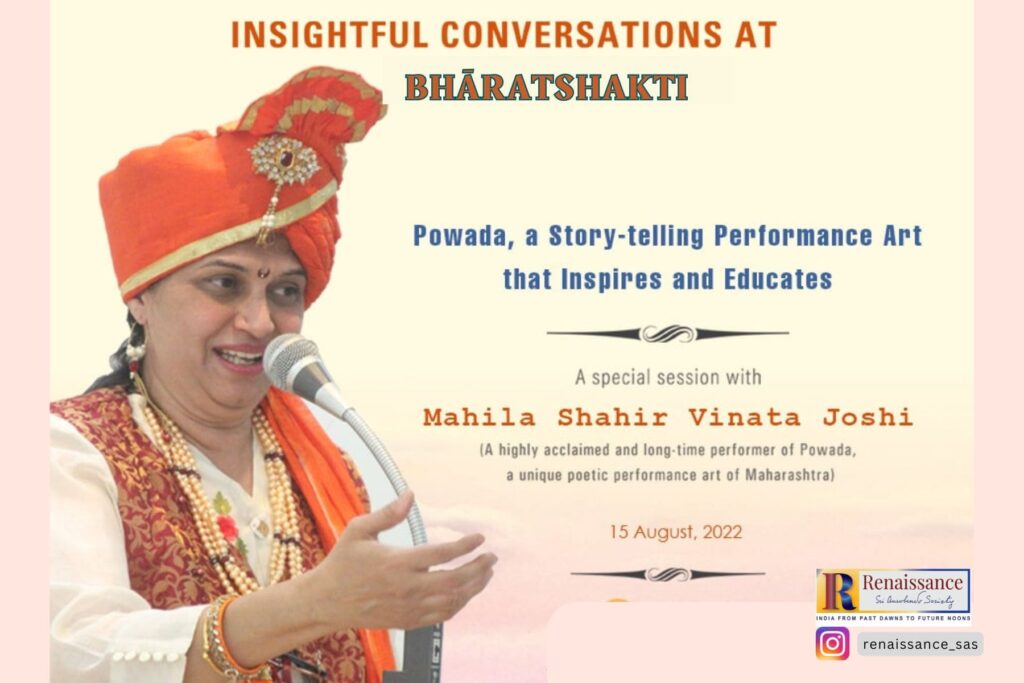
Vinata Joshi speaks to us about Powada, a popular performance art from Maharashtra, involving story-telling, poetry, music and theatre arts.
Powada, a Story-telling Performance Art (Video) Read More »
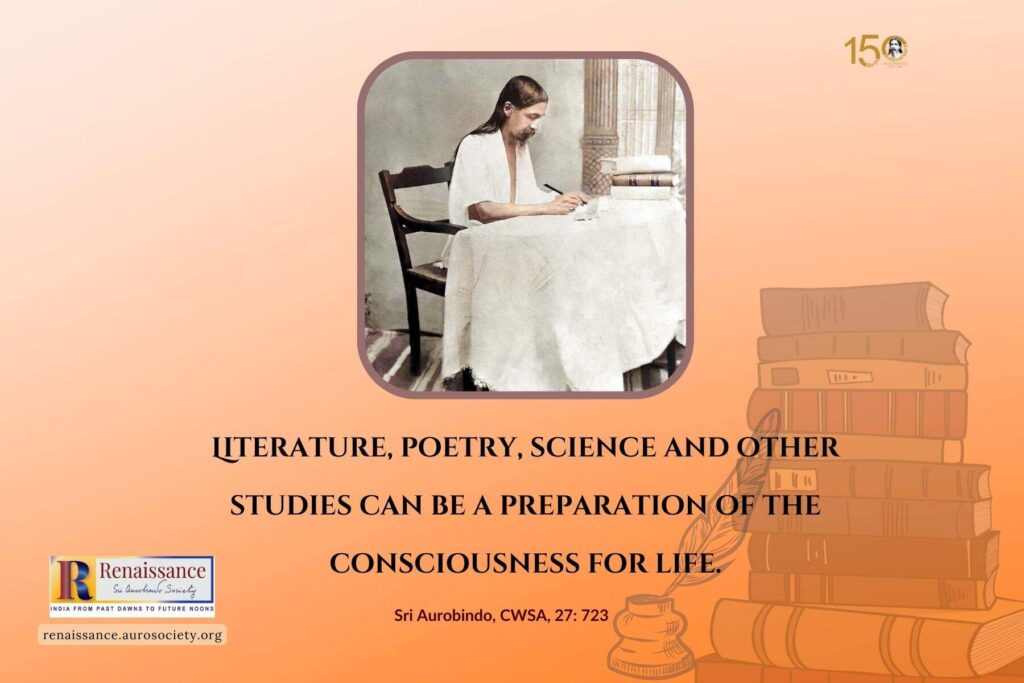
This article illustrates how to understand Sri Aurobindo through insightful literature and appreciate literature as a reflection of the truths of life as expounded by Sri Aurobindo.
Understanding Sri Aurobindo and the Nature of Life through Literature Read More »
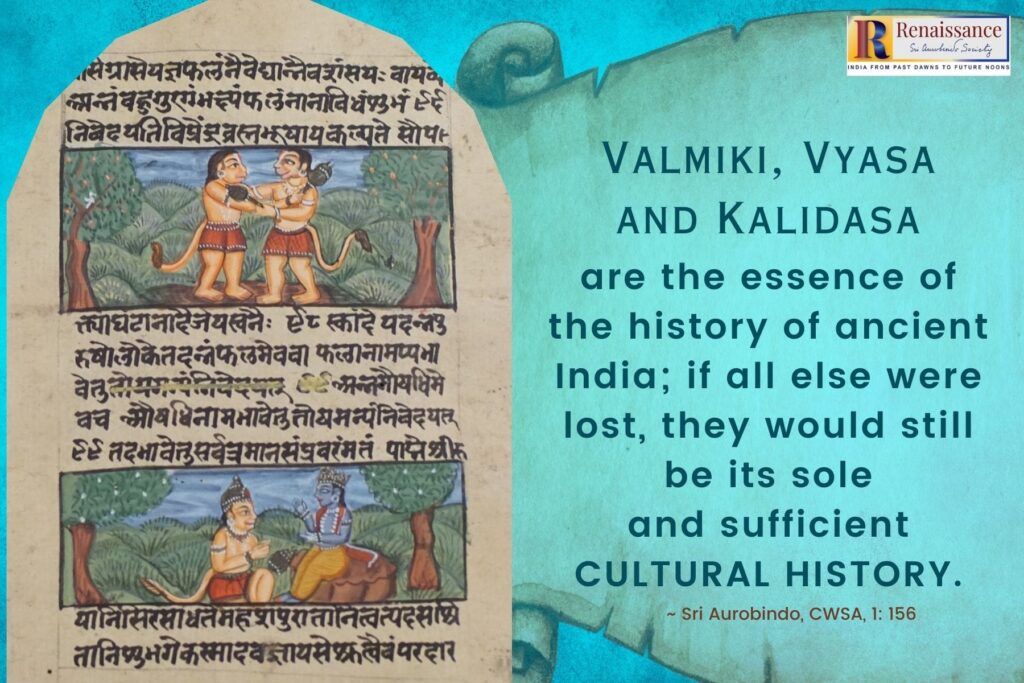
In this part, Prema Nandkumar elaborates upon Sri Aurobindo’s brilliant translations of selected shlokas from a few sargas of Valmiki Ramayana.
Sri Aurobindo’s Interpretation of Indian Culture: The Ramayana – 2 Read More »
The author writes that peace can be built securely only by means of culture, and culture for peace implies a new orientation of human consciousness; it implies eventually transformation of human consciousness.
Peace through Culture and Education Read More »
“At some fortuitous moment of time the glory of Indian civilisation met the grandeur of the Sanskrit language. The Ramayana and the Mahabharata were born.”
Sri Aurobindo’s Interpretation of Indian Culture: The Ramayana – 1 Read More »
The Mother traces the differentiation between masculine and feminine genders to the way the primordial cause of creation of the universe has been explained in many ancient traditions. She adds that both men and women are in several ways enslaved to each other. And to deal with the problem of superiority and inferiority, one must must free oneself from all the inner enslavement and treat both the genders with perfect equality.
The Mother on Gender Equality Read More »