The Mother

Home » The Mother

Goddess Durga and the Festival of Devi: An Inner Meaning (Part 2)

The author outlines how the nine forms of the goddess form an ascending hierarchy of shakti or energy rising from the mulādhara, traveling upwards gaining strength and force and momentum with each upward gust and impulsion until it reaches the crown and passing beyond unites with its Lord.

Goddess Durga and the Festival of Devi: An Inner Meaning (Part 2) Read More »

Goddess Durga and the Festival of Devi: An Inner Meaning (Part 3)

The author, in this part, cites some significant descriptions given by the Mother of her realisations. These passages speak of how Sri Aurobindo’s Integral Yoga takes a giant leap over tradition wherein he is not content with the slaying of a demon or many demons but by their conversion or dissolution for good. But for this not only man but even the gods must collaborate.

Goddess Durga and the Festival of Devi: An Inner Meaning (Part 3) Read More »

Morning Glory and the Varied Colours of Gratitude

In our flower-meditation series, Sheeba Naaz reflects on her own experience and a few other gratitude stories she has heard and witnessed around her. She reminds us that it is not really the happiness which makes us feel grateful but on the contrary it is gratefulness that makes us happy. The Mother’s ‘handkerchief’ story also finds a special place of honour in this beautiful piece.

Morning Glory and the Varied Colours of Gratitude Read More »

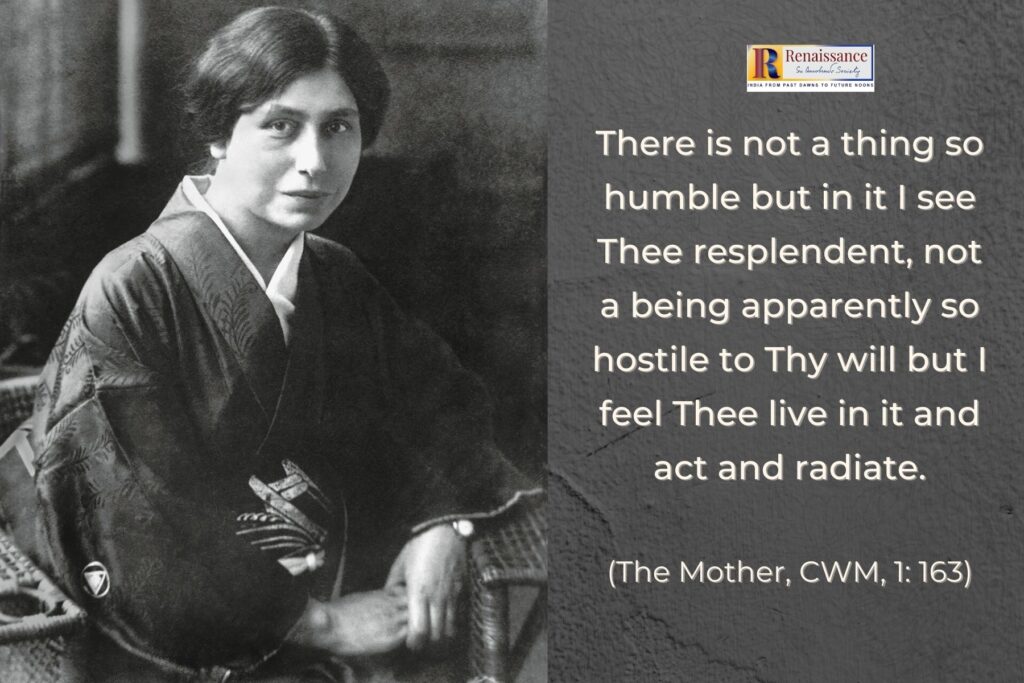
The Absolutely Perfect, the Absolutely Humble Divine

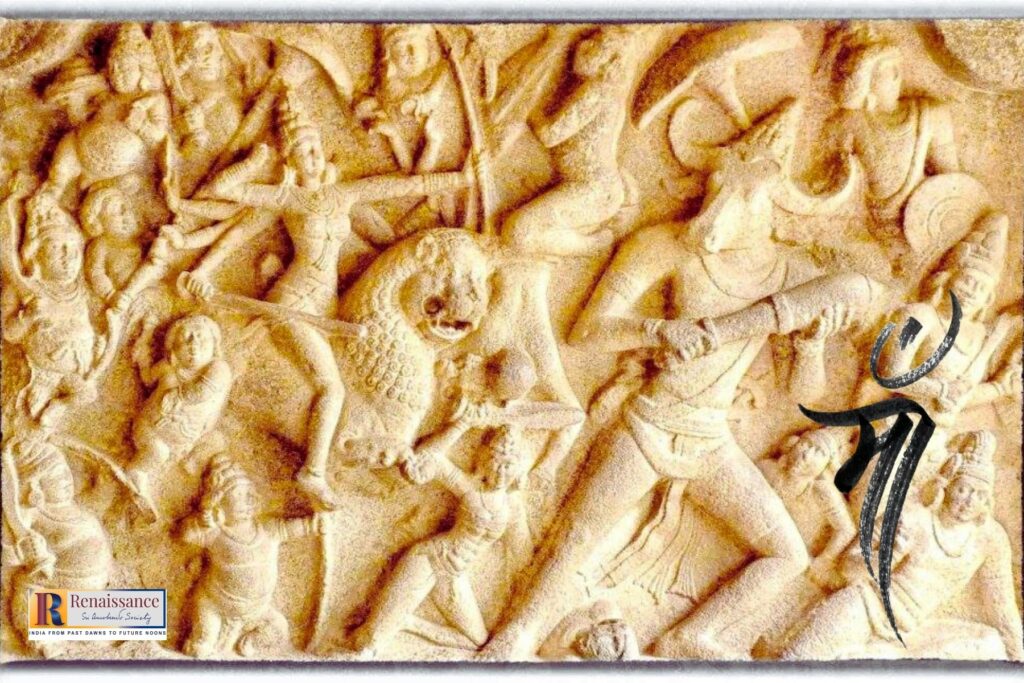
In India, since millennia, modesty or humility has been considered the one of the most noble virtues, one that is the ornament of all virtues. In present times when self-promotion is not only an acceptable practice but has actually become a highly sophisticated skill that one must master if one wants to be ‘successful’, humility often takes a backseat. But if we step back for a moment and reflect carefully we will find that it is exactly in times like these that we must sincerely begin to examine for ourselves what is true humility. And more importantly, how it is related to our inner journeys, our growth as conscious individuals with an aspiration to grow inwardly and walk the path that takes us closer to our highest Self within. This issue is dedicated to exploring Humility as one of the Twelve Powers which the Mother spoke of as necessary for the full manifestation of Her Work.

The Absolutely Perfect, the Absolutely Humble Divine Read More »

“True Humility is Humility Towards the Divine”

Selections from various writings and talks of the Mother and Sri Aurobindo are presented to help us understand the meaning of true humility, which is about constantly referring oneself to the Divine, placing all before the Lord, and having a living sense that one is nothing, can do nothing, understand nothing without the Divine. We also learn that excessive self-esteem and self-depreciation are both wrong attitudes when cultivating the quality of true humility.

“True Humility is Humility Towards the Divine” Read More »

Parable of the Snake and the Rat

The Mother reminds us that vigilance is indispensable for all true progress. As we try to grow in sincerity and practice true humility, it is important to stay vigilant and not get bloated with our own egos that we are some great sādhakas. The Mother is the path and the Mother is the goal, says Sri Aurobindo. It is always the Mother who does the sādhanā in us. Our effort is to ensure that we keep our inner temple clean and purified and for that sincerity, humility and vigilance are all very important. This little story told by Swami Sivananda emphasises how essential vigilance is for any aspirant; it also highlights what is fake humility and the necessity to be wary of that.

Parable of the Snake and the Rat Read More »

Scroll to Top