Vol. VII, Issue 10
Author: Beloo Mehra
Any attempt to go deep into the elevating charm and beauty of Sri Aurobindo’s literary writings must begin and end with Savitri, his epic mantric poem. Sri Aurobindo, the Rishi, like a precisely perfect scientist used writing of Savitri, in his own words, as a field of experimentation. A most perfect example of how all life and work can truly be Yoga.
I used Savitri as a means of ascension. I began with it on a certain mental level, each time I could reach a higher level I rewrote from that level. . . In fact, Savitri has not been regarded by me as a poem to be written and finished, but as a field of experimentation to see how far poetry could be written from one’s own Yogic consciousness and how that could be made creative.
~ Sri Aurobindo, CWSA, Vol. 27, p. 272
In its deepest sense, Savitri is a record of Sri Aurobindo’s and the Mother’s Yoga, and that is why K.R. Srinivasa Iyengar once wrote that the very act of concentrated reading of the poem becomes a kind of participation in its spiritual action. One such spiritual action that Savitri performs for an aspirant who connects with the Light and Force of its mantric words is that it fills the soul, heart and mind with an unshakeable faith and optimism and hope for a new future that is dawning. It removes the cobwebs of despair and doubt and shines light on all dark corners hiding within.
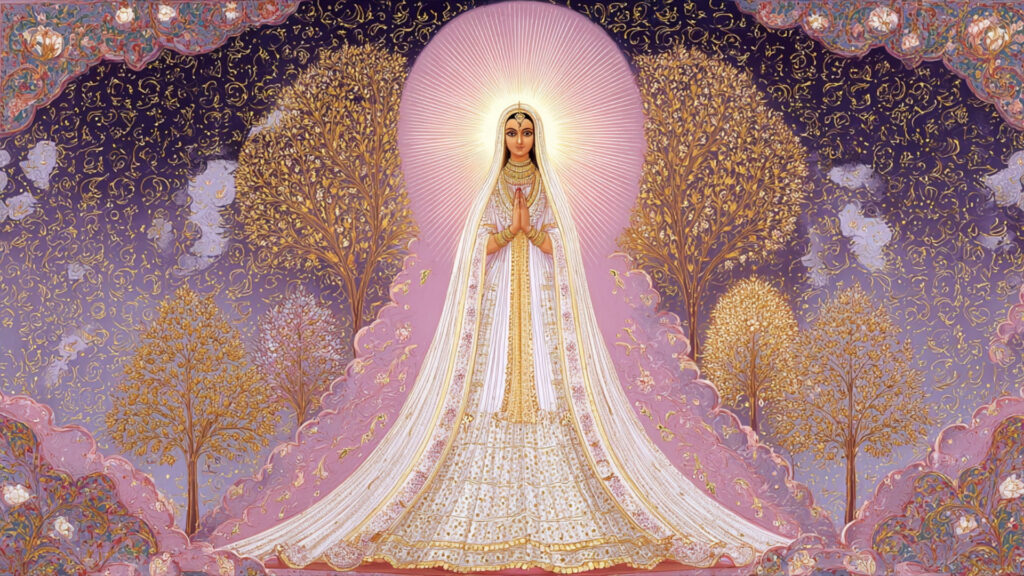
One of the ways Savitri, the Veda of the Future, does this is by invoking the Divine Dawn who represents the inner awakening of human consciousness, the coming of divine light into the human mind.
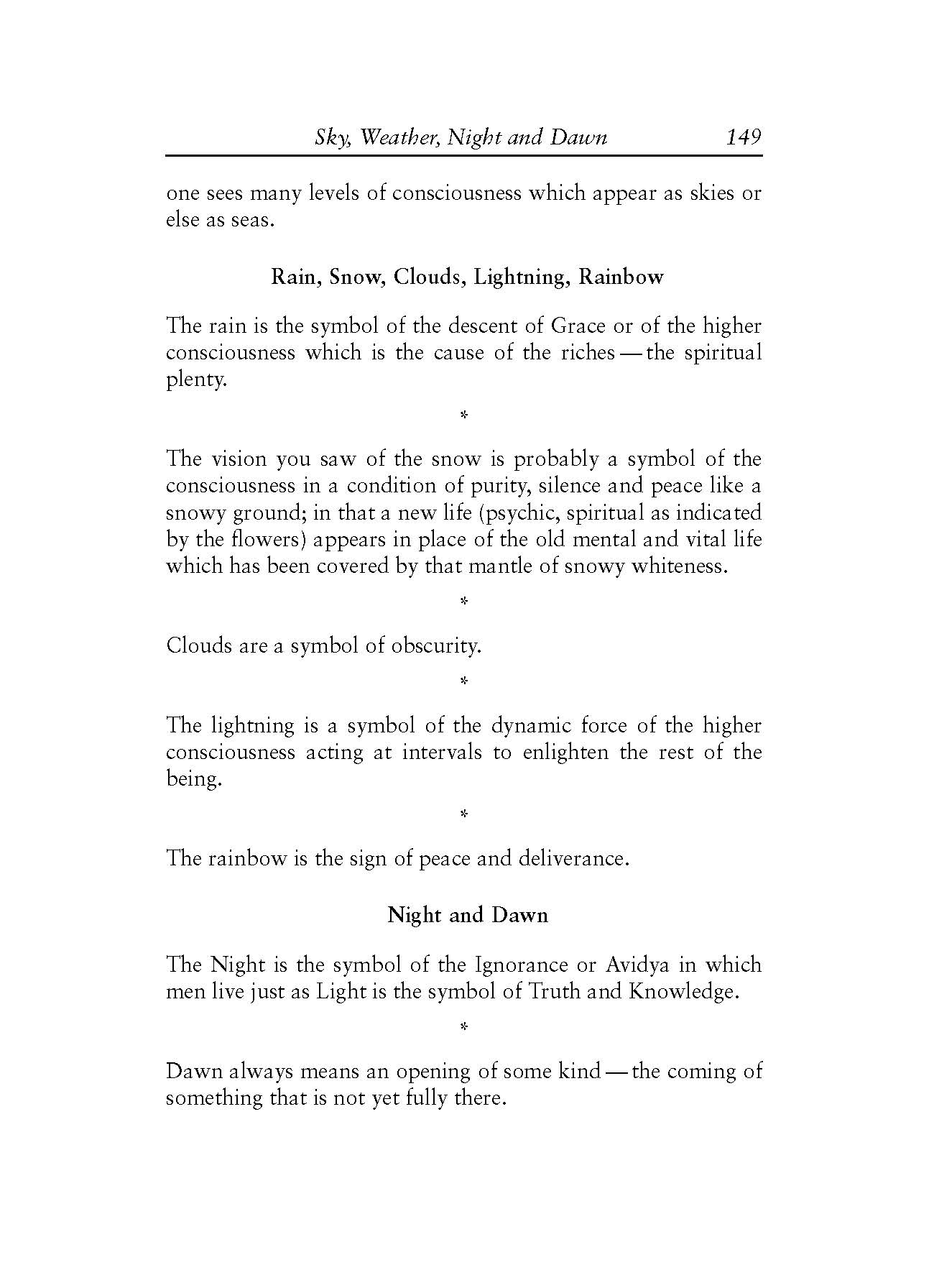
The Night is the symbol of the Ignorance or Avidya in which men live just as Light is the symbol of Truth and Knowledge.
Dawn always means an opening of some kind—the coming of something that is not yet fully there.
~ Sri Aurobindo, CWSA 30: 149
In the Veda the coming of the Dawn or Goddess Usha symbolises the Truth won out of the Night of darkness. “She is the light of the Truth and the Felicity pouring on us from the Lord of Wisdom and Bliss” (CWSA 15: 298).
Night is not our beginning nor our end;
She is the dark Mother in whose womb we have hid
Safe from too swift a waking to world-pain.
We came to her from a supernal Light,
By Light we live and to the Light we go.
[…]
There is a morning twilight of the gods;
Miraculous from sleep their forms arise
And God’s long nights are justified by dawn.~ Sri Aurobindo, Savitri, p. 601
Let us leave aside the profound meaning and symbolism behind the imagery of the Divine Dawn and the Night of Nescience or Inconscience and their significance at the cosmic level. Let us focus only on the deeper psychological dimension of what these images mean for us in our journey through life.
In the material universe, the physical dawn is the symbol of the Dawn Divine who brings with her the light of heaven. Dawn reminds us to turn our gaze towards the Light, for the Night will soon end. Light is hiding there in its dark bosom waiting. This is the assurance that the Dawn brings, that Light is right behind no matter how dark the night is.
Sri Aurobindo, the Kavi, the Seer, also reminds us in a delightful manner that night too serves an important purpose in the larger plan. If Dawn is a shining Mother for us, so is Night the dark Mother in whose womb we hide safe for a while because we may not be yet ready for “too swift a waking to world-pain”. But we are children of the Light and to the Light we shall always proceed; hence we must always strive to live in and grow towards Light.
In this issue we briefly take up the theme of Dawn in Sri Aurobindo’s literature and present it in two ways. One is a video rendition of Sri Aurobindo’s Usha Stotra (Hymn to Usha). Written in Bengali in the manner of the Suktas of the Rigveda, Sri Aurobindo composed it in Pondicherry. We use the translation done by Shri Nolini Kanta Gupta for the video.
The other offering is a meditation on the first few lines from Sri Aurobindo’s Ilion which opens with the The Dawn of the Last Day, the day Troy will fall.
We continue with the two ongoing series. The focus in part 3 of Sri Aurobindo as a Literary Artist shifts to Sri Aurobindo’s monumental prose writings such as The Life Divine and Essays on the Gita. K.R. Srinivasa Iyengar helps us appreciate the remarkable balance, clarity and the vigour of the phrasing Sri Aurobindo employs which he says, “are almost as worthy of reverent study as are their logical structure and their close-grained fabric of thought”.
In part 4 he gives several examples to illustrate that Sri Aurobindo’s brilliant prose writings can’t hide the poet that he was, and in many a places, the knife-edge clarity and sharpness of his prose dissolve into poetic imagery and symbolism.
Prema Nandakumar in part 3 and 4 of her ongoing essay zooms in on Vishnu and Bhagavata Puranas which Sri Aurobindo held in high esteem. He particularly recognised the Bhagavata to be “the culmination of the movement which had the most important effects on the future, the evolution of the emotional and ecstatic religion of Bhakti” (CWSA 20: 375).
We hope our readers will enjoy going through these offerings in this issue. As always, we offer this work at the lotus feet of Sri Aurobindo and the Mother.
In gratitude,
Beloo Mehra (for Renaissance Editorial Team)
~ Design: Beloo Mehra