Vol. VII, Issue 10
Author: Prema Nandakumar
Continued from Part 2
Editor’s Note: This part zooms in on Vishnu and Bhagavata Puranas which Sri Aurobindo held in high esteem. The author also illuminates on the special connection between Sri Aurobindo and Sri Krishna.

In the context of Aurobindonian studies, the Vishnu and Bhagavata Puranas call for special attention. Of the incarnations, Sri Aurobindo was drawn most to Krishna. Just as Krishna literature in India is enormous, the inspiration of Krishna-Vasudeva on Sri Aurobindo is also immeasurably great.
There are various ways in which Krishna is seen in the writings of Sri Aurobindo. The Krishna of Essays on the Gita is wisdom-incarnate, obviously a historical figure (we have references to him as “a knower of Brahman” in the Chhandogya Upanishad), and the internal guide for the aspirants engaged in action, the charioteer in control of the horses, “the symbol of the divine dealings with humanity” (CWSA 19: 18).
WATCH
Sri Aurobindo and Sri Krishna
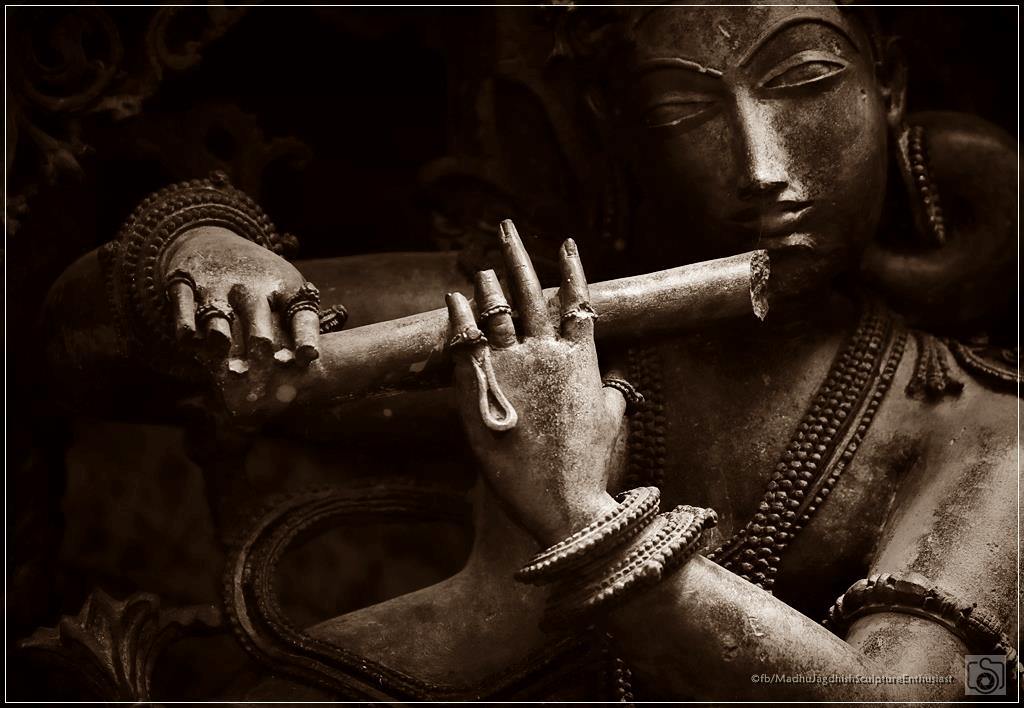
Krishna in Sri Aurobindo is also the director of our spiritual journey. Even if you deny him, He is there, firmly ensconced in our hearts. He is an experience who holds you in thrall:
One is there, Self of self, Soul of Space, Fount of Time,
Heart of hearts, Mind of minds, He alone sits, sublime.
Oh, no void Absolute self-absorbed, splendid, mute,
Hands that clasp hold and red lips that kiss blow the flute.
All He loves, all He moves, all are His, all are He!~ Sri Aurobindo, Krishna, CWSA 2: 637
Finally, beyond the statesman and charioteer of the Mahabharata, and the Yogeshwara-Teacher on the Kurukshetra, is the sheer Presence which assures us of Ananda Consciousness that strikes down all the worries, sorrows and frustrations of life on earth.
This is the Flute-player of Brindavan, the Anandamaya Purusha who transmits the Delight of Existence throughout creation. All creation holds hands with Him in the Ras Lila of life. That is the ecstatic Avatar who is very much one of us. Sri Aurobindo issues an open invitation for us to join the Ras Lila:
Come then to Brindavan, soul of the joyous; faster and faster
Follow the dance I shall teach thee with Shyama for slave and for master.
Follow the notes of the flute with a soul aware and exulting;
Trample Delight that submits and crouch to a sweetness insulting.
Then shalt thou know what the dance meant, fathom the song and the singer,
Hear behind thunder its rhymes, touched by lightning thrill to his finger,
Brindavan’s rustle shalt understand and Yamuna’s laughter,
Take thy place in the Ras and thy share of the ecstasy after.~ Ahana, CWSA 2: 491
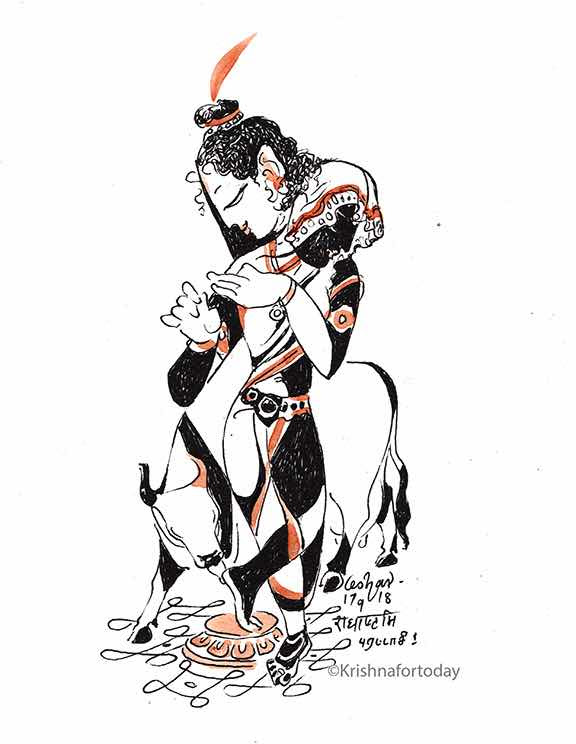
This has been the eternal call to the aspirant community from times immemorial. The Puranas have taught us the entire background of the Krishna phenomenon, immersed us in the experience of the Avatars, and made each of us feel specially related to Krishna as a babe, as a prankster, as a lover, as an ambassador, a friend, a charioteer, a Yogacharya. Two Puranas, the Vishnu and the Bhagavata, particularly zero in on the Supreme’s avatar as Krishna, and Sri Aurobindo considered them as best among the Puranas.
Divided into six Amsas of 126 chapters, the Vishnu Purana contains 6000 slokas. The Varaha, Narasimha, Krishna and Kalki incarnations are detailed along with the stories of legendary personalities like Dhruva, Kakudmi and Pururavas.
The Purusha-Prakriti duo is very clearly imaged in this Purana which gives a detailed account of the birth and nature of Lakshmi. Most important of all, the Purana concludes with a teaching of yoga by Kesidhwaja to Kandikya Janaka. Though the narrative has been rich in histories so far, it now appears as though all these strivings on earth are but focused on yoga that leads to realisation. After explaining the steps of yoga, Kesidhwaja launches upon a sublime description of Narayana:
One who has taken up yoga to cleanse his mind must meditate on this cosmic form which has been hailed as being capable of destroying our accumulated sins. As Agni unites with wind to raise big flames for burning and destroying a bush, Vishnu resides in the hearts of yogis and burns up all sins.
Hence the aspirant must hold this glorious Form which is the source of all Shaktis. This is pure Dharana. The mind wanders no more and remains one with this Supreme which is beyond the three “ways”. This is the auspicious refuge for yogis (subhasraya)… the Dharana needs an Adhara.
The following is the Form of Hari which has to be meditated upon. He has a joyous face, eyes like beautiful lotuses, beautiful cheeks, a gracious forehead broad like a seat, beautiful ear-drops dangling from well-formed ears, a conch-like throat, a vast chest holding Lakshmi and the Srivatsa stamp, the waist with triple-folds and a deep navel, eight or four huge shoulders, equally formed thighs, crystalline garment, ornaments like the crown, necklaces and shoulder-bands.
Such is the image of Vishnu to be meditated upon. Besides, one should image Him as holding in his six hands the bow, the mace, the sword, the discus and the Aksha garland and the other two in the pose of giving refuge and boons. If one meditates upon the four-shouldered Lord, one must add the conch, the discus, the mace and a lotus. The fingers should be seen wearing various rings.
Kesidhwaja then tells Kandikya that as Dharana yoga progresses, the image will be very much continuous in the yogin’s thoughts, whether he is walking, eating or sleeping. Henceforth images like ornaments, hands and garments must be slowly reduced till the meditation rests solely on the Supreme without any of these attributes, nor should one go in search of another image to focus upon. This leads to Samadhi.
Feelings like “me” and “mine” do not attack the soul anymore for he is totally immersed in the meditation upon the Supreme. So close is he to the Lord that he experiences the Divine as Ramakrishna Paramahamsa did. That was the aim of Sri Aurobindo when he wrote to his wife Mrinalini in 1905 that he wanted to attain and experience God. He did not have in mind the popular conception of God which has too often been a kind of routine since several centuries.
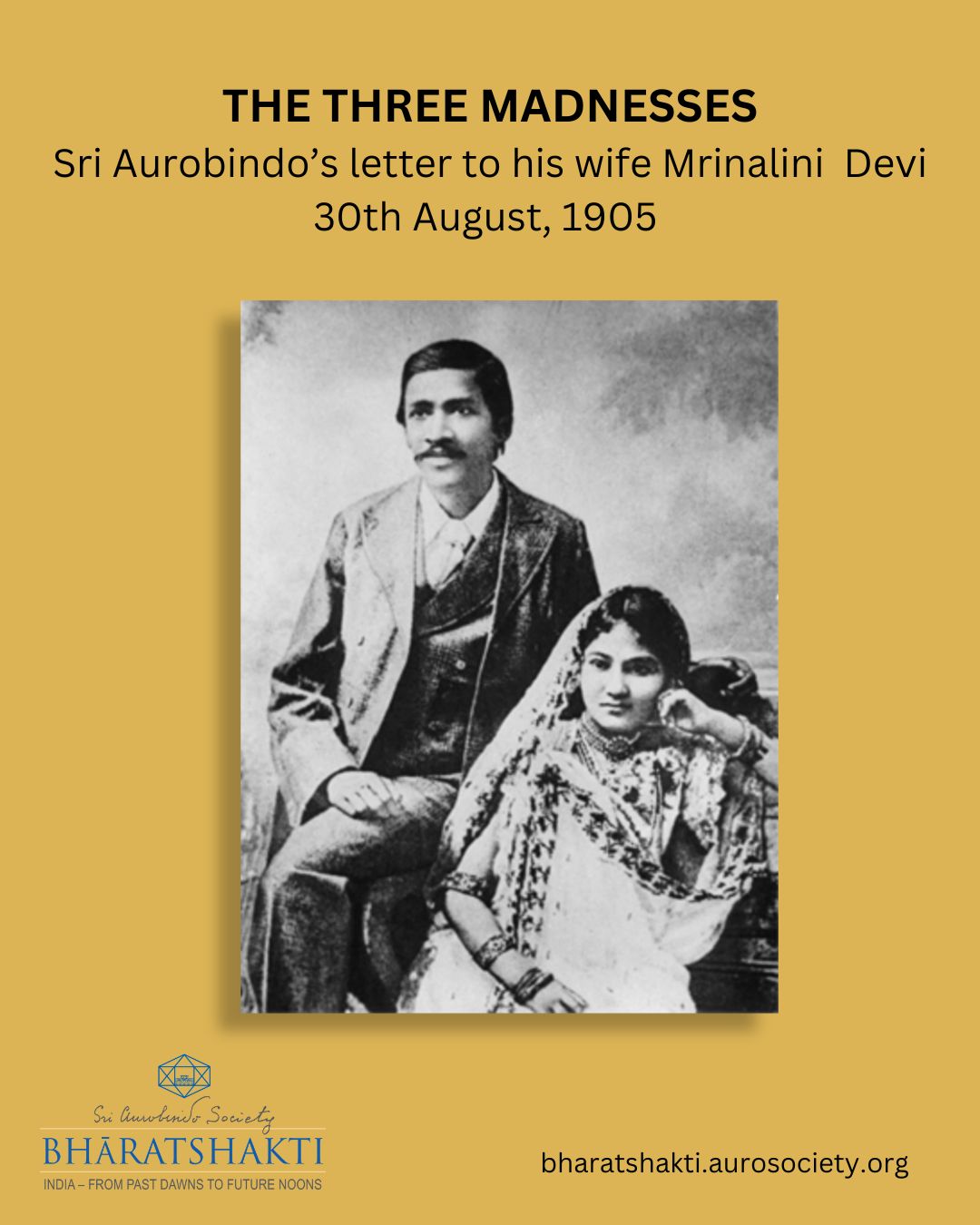
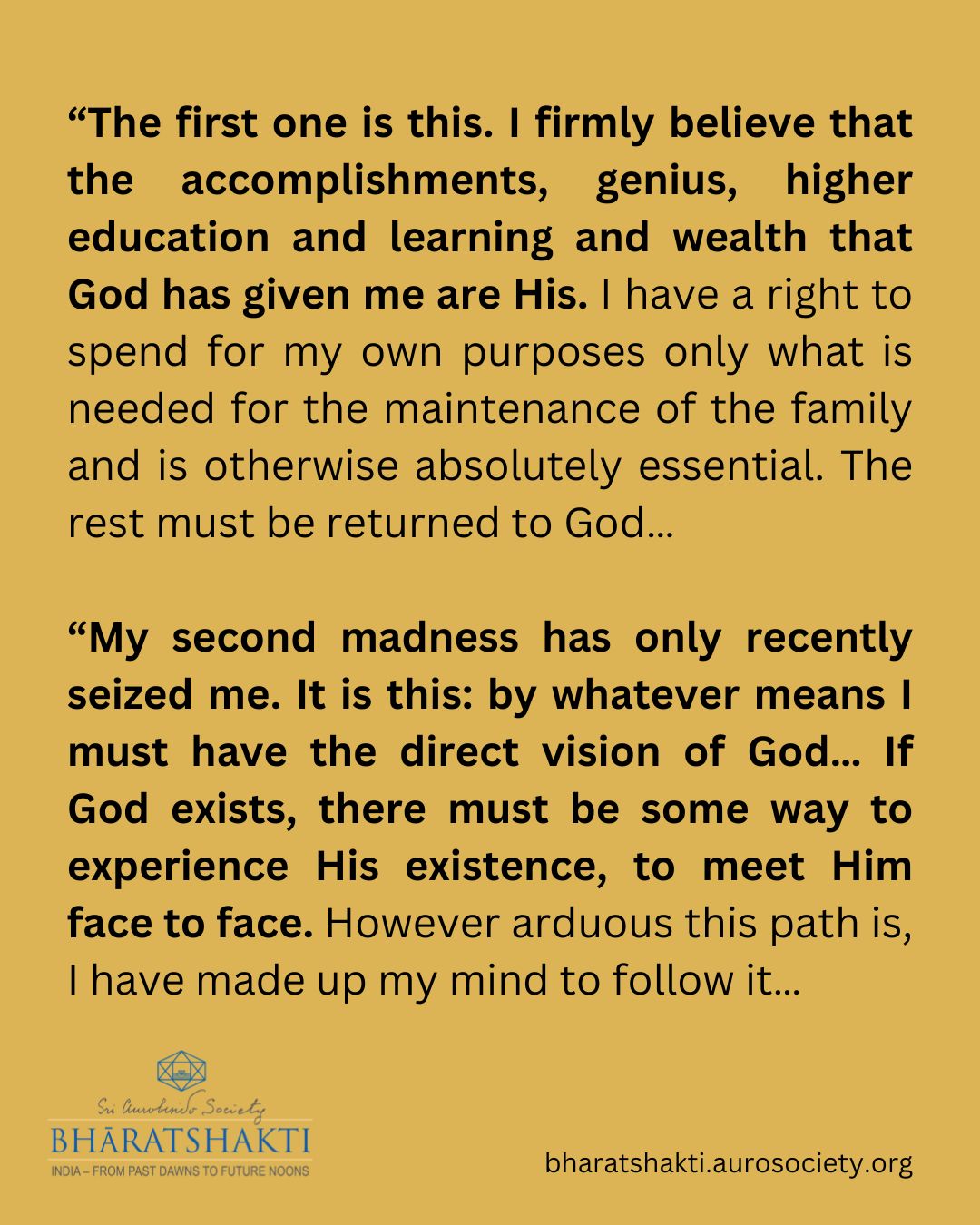
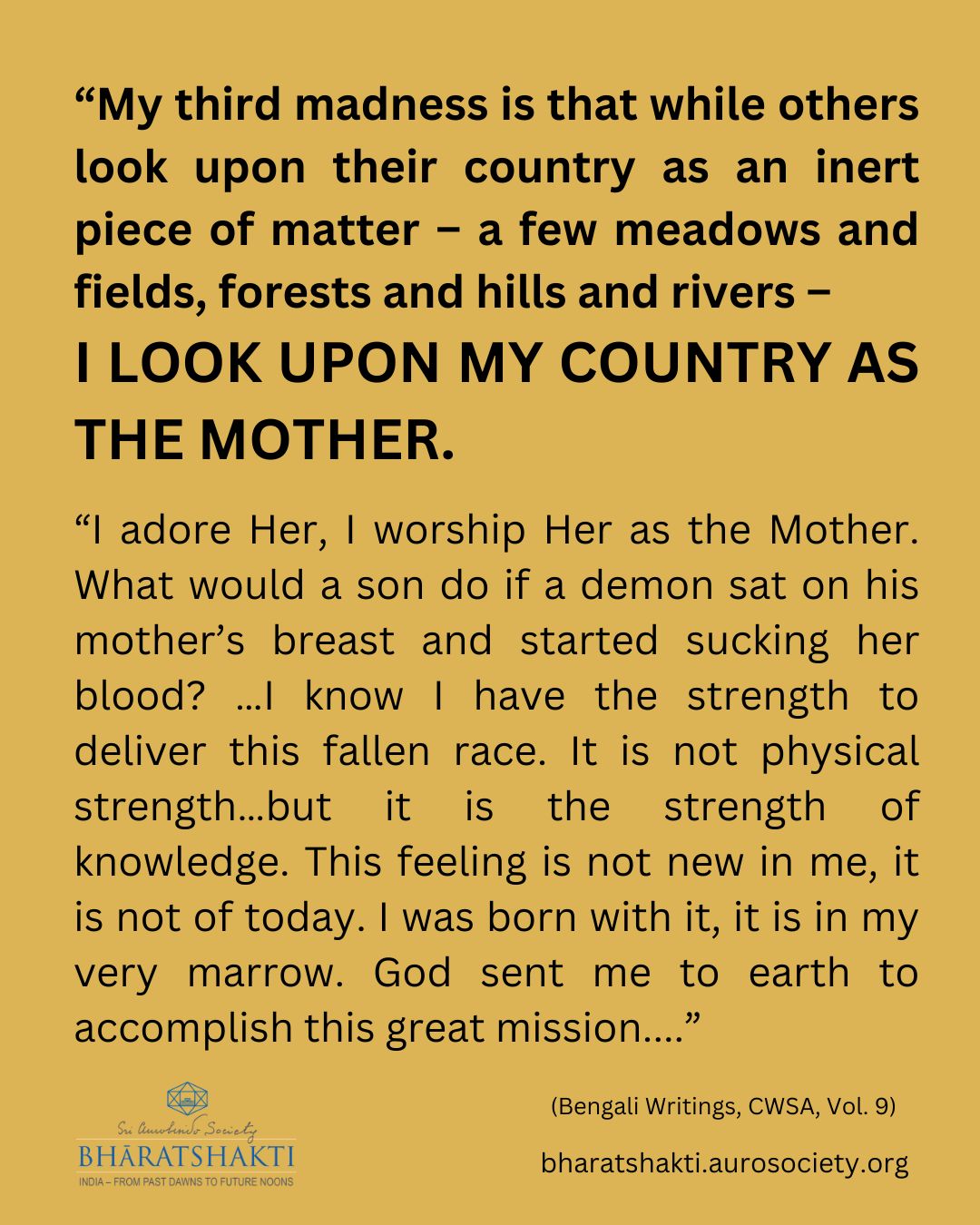
For Sri Aurobindo the Supreme was to be gained as a partner so as to make Him the inspirer, leader, the charioteer of his life. The Narayana Darshan in the Alipore Jail and the Siddhi of 24th November, 1926 were both a descent of Krishna into Sri Aurobindo underlining the Master’s assurance that an unfailing aspiration always draws towards itself the answering Grace.
Watch
Significance of Siddhi of November 24, 1926 (Talk in Hindi)
Reminiscences of Siddhi Day (Talk in English)
The Vishnu and Bhagavata Puranas are thus a definite help to salute the yoga of Sri Aurobindo. He held the former in high esteem. But the Bhagavata Purana, in particular, received high commendation from him as “a still more remarkable production full of subtlety, rich and deep thought and beauty” (CWSA 20: 375).
Approaches to the Purana can help us understand its role in sustaining Sanatana Dharma and why Sri Aurobindo stood facing the Ganges in Jai Krishna’s garden house at Uttarpara and addressed a vast audience about his prison-experiences:
I looked at the Prosecuting Counsel and it was not the Counsel for the prosecution that I saw; it was Sri Krishna who sat there, it was my Lover and Friend who sat there and smiled. ‘Now do you fear?’
~ Uttarpara Speech, CWSA 8: 7
Continued in Part 4
READ:
Part 1
Part 2
~ Design: Beloo Mehra