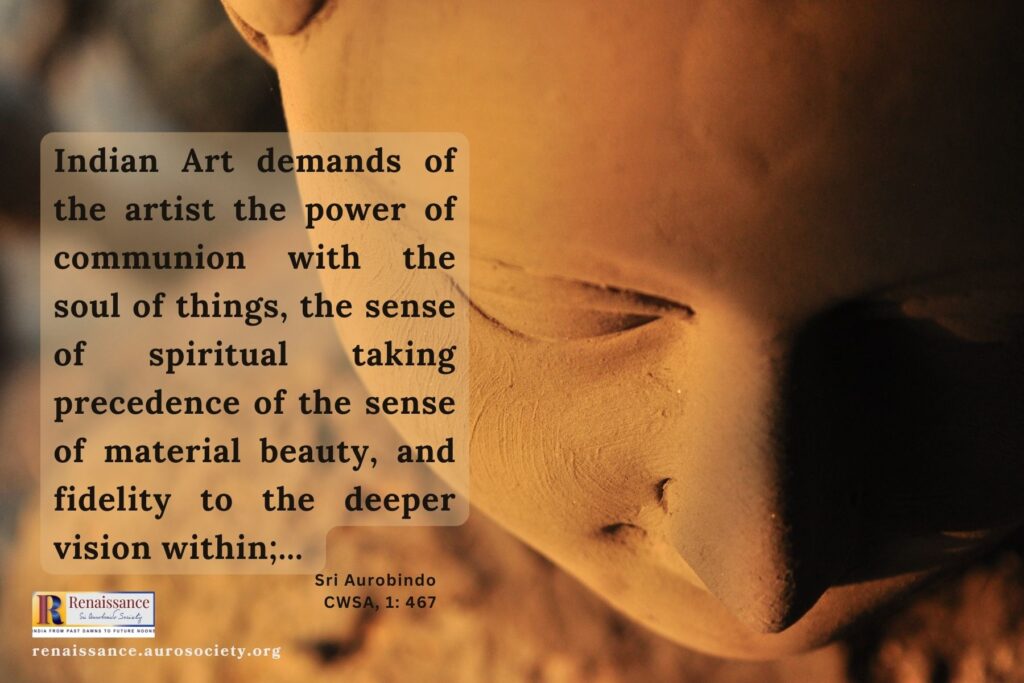
The Persistent Within the Transient
Read what is unique about the origin of the greatest art in India, and how it is essentially different from the Western view of artistic creation.
The Persistent Within the Transient Read More »

Read what is unique about the origin of the greatest art in India, and how it is essentially different from the Western view of artistic creation.
The Persistent Within the Transient Read More »
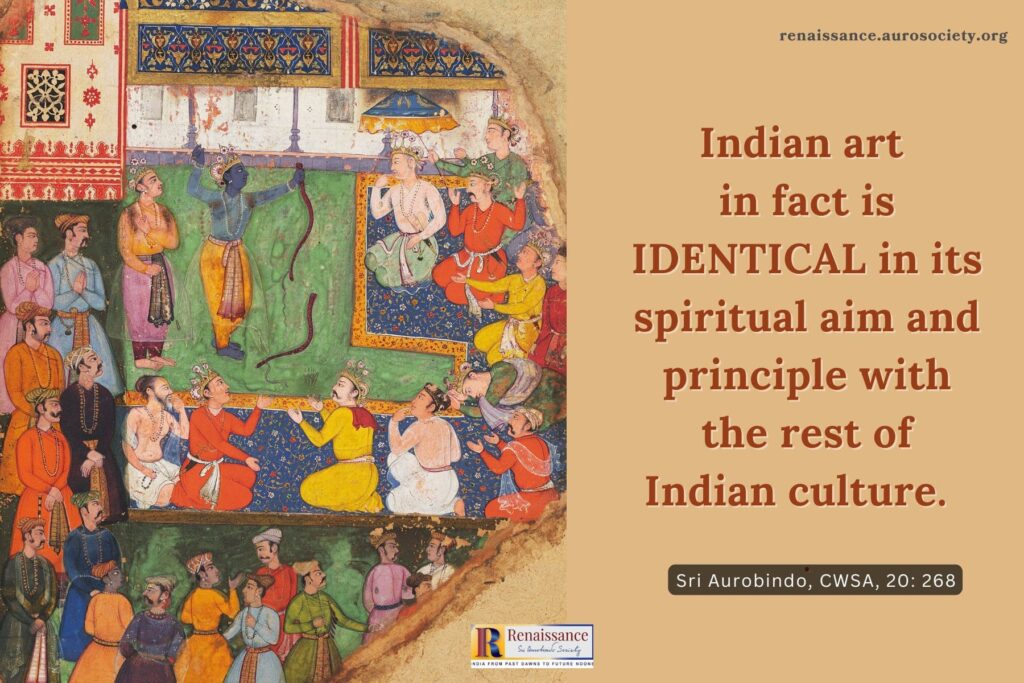
Sri Aurobindo reminds us of the highest business of ancient Indian art at its greatest. The Mother explains how an artist may express the “One Divine.”
Soul-realisation – The Method of Artistic Creation Read More »
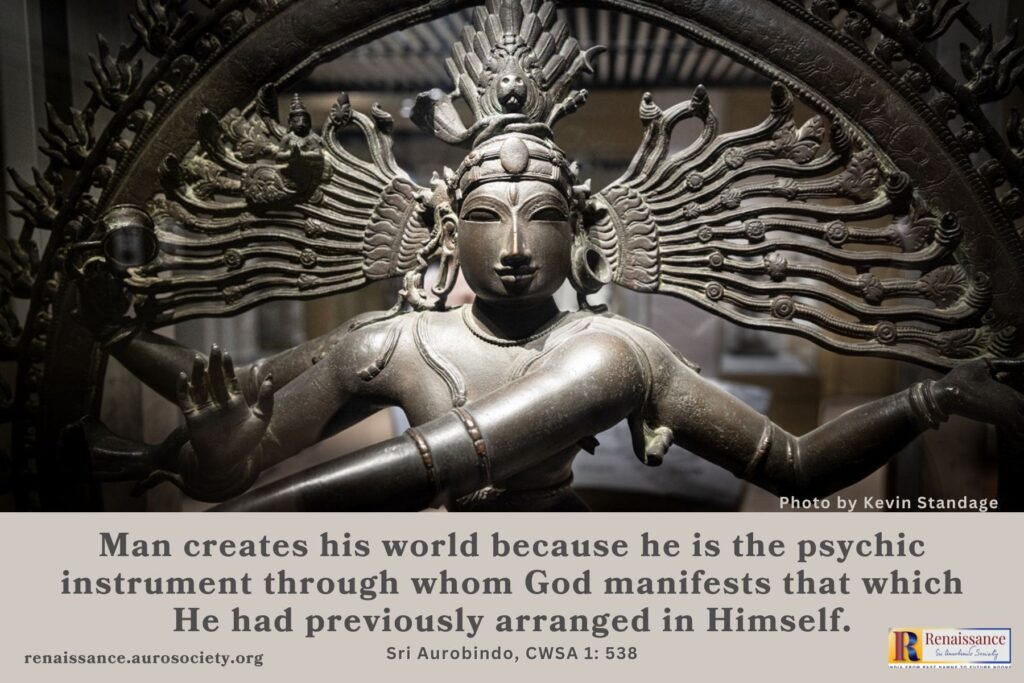
The author gives a broad overview of what constitutes an ideal artist as per the Indian cultural tradition. The focus is primarily on visual arts.
“Creation is a misnomer; nothing in the world is created” Read More »
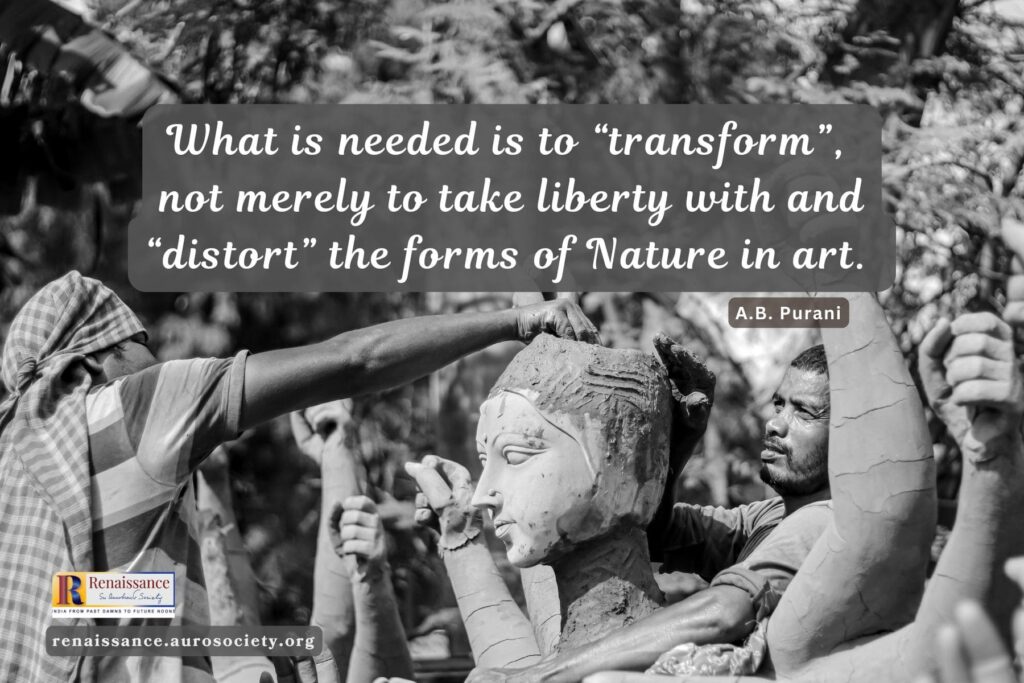
Excerpts from a lecture delivered by A. B. Purani at the J J. School of Art, on February 1, 1954. focusing on the art-creation processes.
Towards a New Synthesis in Artistic Process – I Read More »
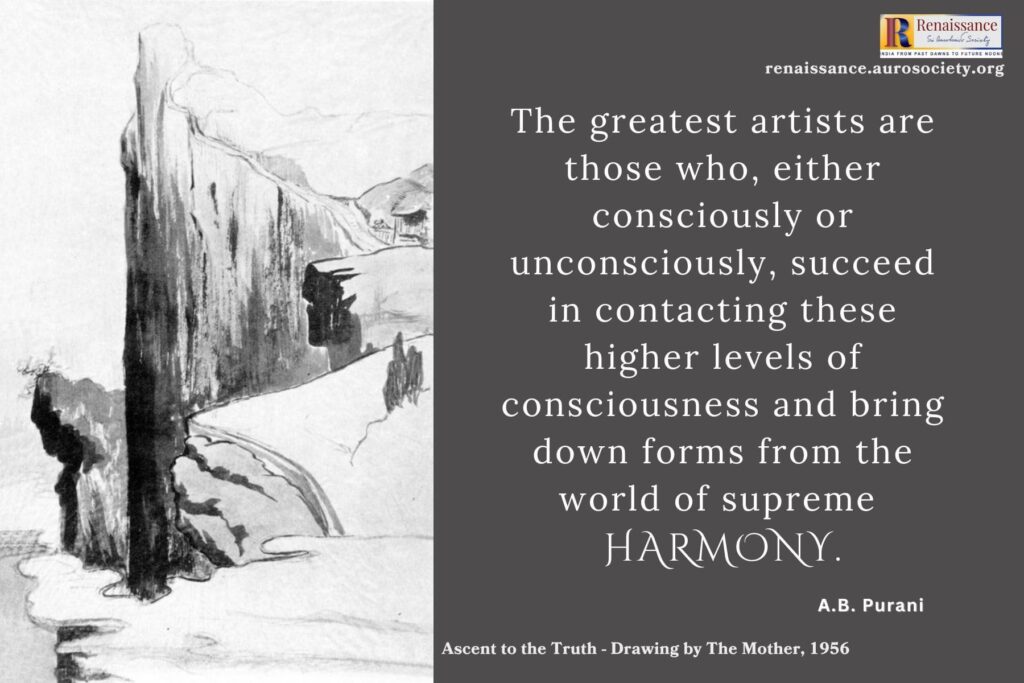
In this part, the author focuses on the future art of humanity. He also summarises the many planes of consciousness to which an artist can ascend through yoga.
Towards a New Synthesis in Artistic Process – II Read More »

Sri Aurobindo explains the right Yogic attitude one must have towards artistic pursuit in the path of integral sādhana.
Art as Part of the Yogic Life Read More »
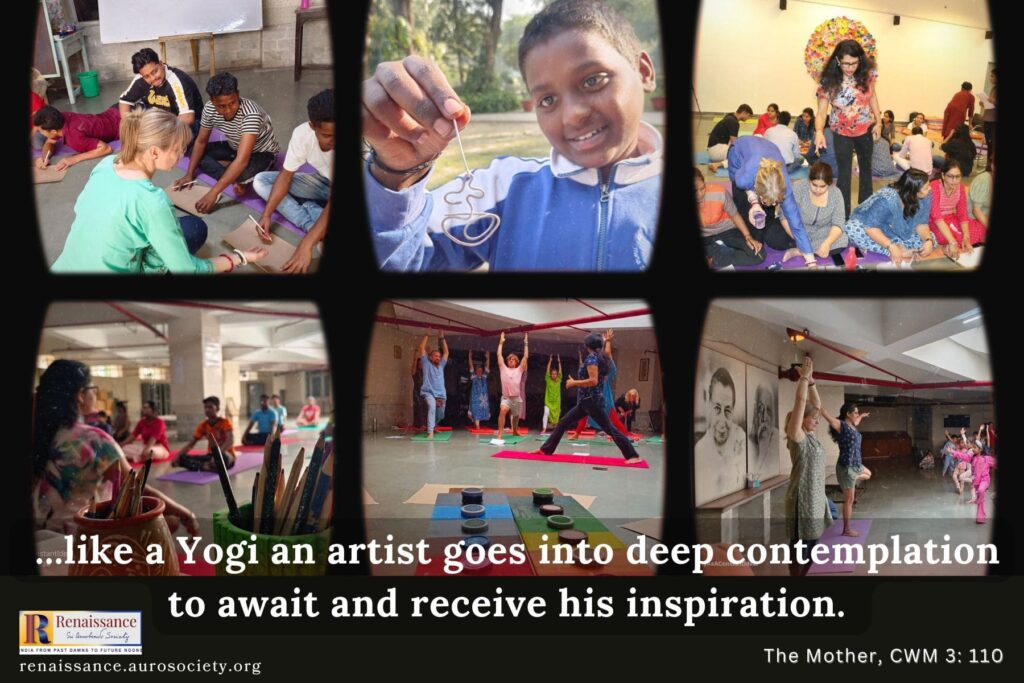
YogArt is dedicated to giving practical form to the Mother’s teaching – “the discipline of Art has at its center the same principle as the discipline of Yoga”.
YogArt – Bringing Art and Yoga Together in Practice Read More »

Volume V, Issue 11-12Author: Ananda Coomaraswamy Editor’s Note: Ananda Kentish Coomaraswamy is a familiar name for every student or rasika of Indian Art. He is widely acknowledged as one of the great art historians and scholars of Indian art. Coomaraswamy was an early interpreter of Indian culture to the West. His numerous writings cover areas
The Aims of Indian Art – Part 1 Read More »