What Makes a Nation Immortal? – Part 2
After outlining what is meant by the nation-soul, the author in this second part of the essay explains the meaning of a nation’s rebirth.
What Makes a Nation Immortal? – Part 2 Read More »

After outlining what is meant by the nation-soul, the author in this second part of the essay explains the meaning of a nation’s rebirth.
What Makes a Nation Immortal? – Part 2 Read More »
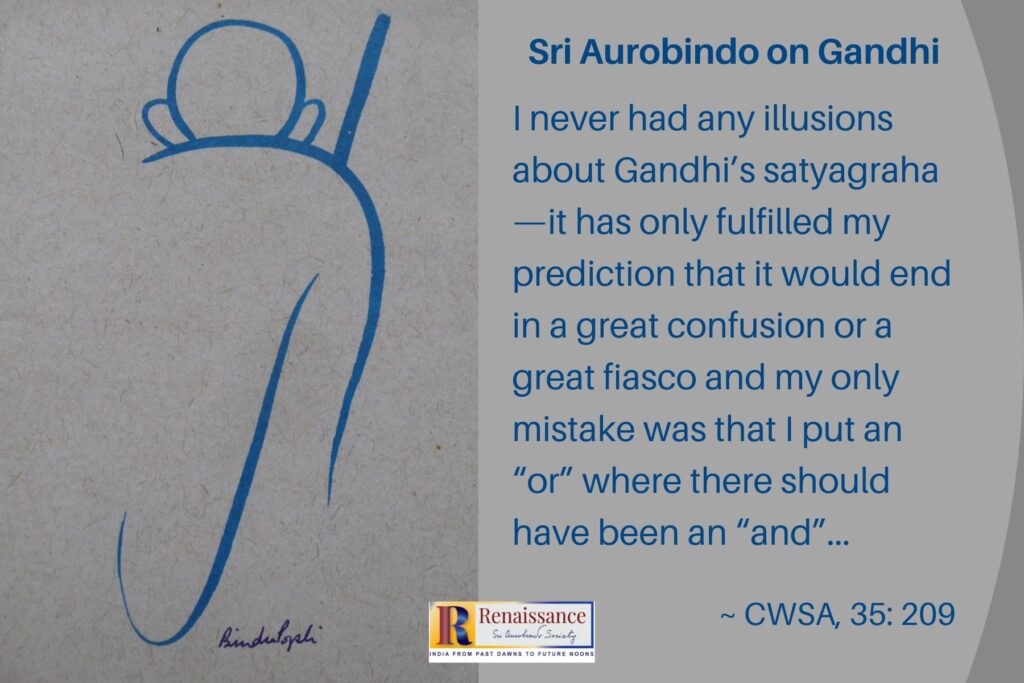
In this India’s 75th year of political independence, it is timely to present an assessment of Gandhi’s role in India’s freedom movement. Given that our national mind now seems ready to evaluate and understand the role played by some of the leading personalities in shaping the post-Independence India, revisiting this article written by Amal Kiran in 1949, which has the approval of Sri Aurobindo, is highly necessary and relevant today.
The Real Gandhi: An Impartial Estimate of his Greatness – Part 1 Read More »
In this second part, Amal Kiran asks two key questions – Did Gandhi embody the soul of India? Was it appropriate to give Gandhi the mysticism-charged Upanishadic title of “Mahatma”? His answer to both, we find, is in negative.
The Real Gandhi: An Impartial Estimate of his Greatness – Part 2 Read More »
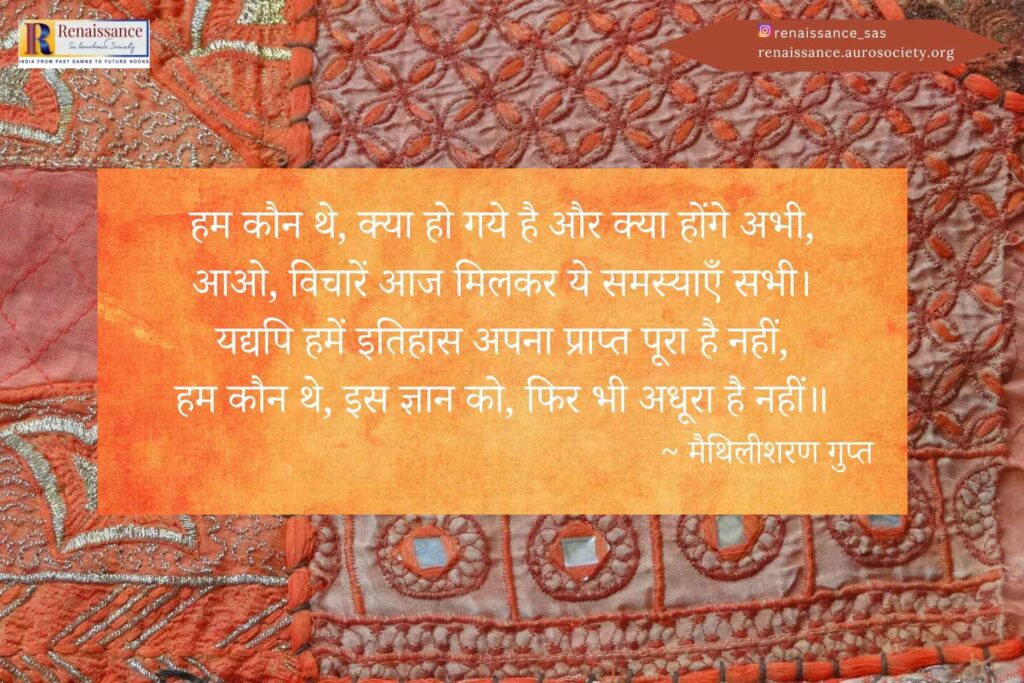
Selected excerpts from Maithilisharan Gupt’s most famous work, Bharat Bharati, which stirred deep nationalist emotions among Indians when it was first published in 1912.
Bhārat-Bhārati – Excerpts from Rashtrakavi’s Famous Kāvya Read More »
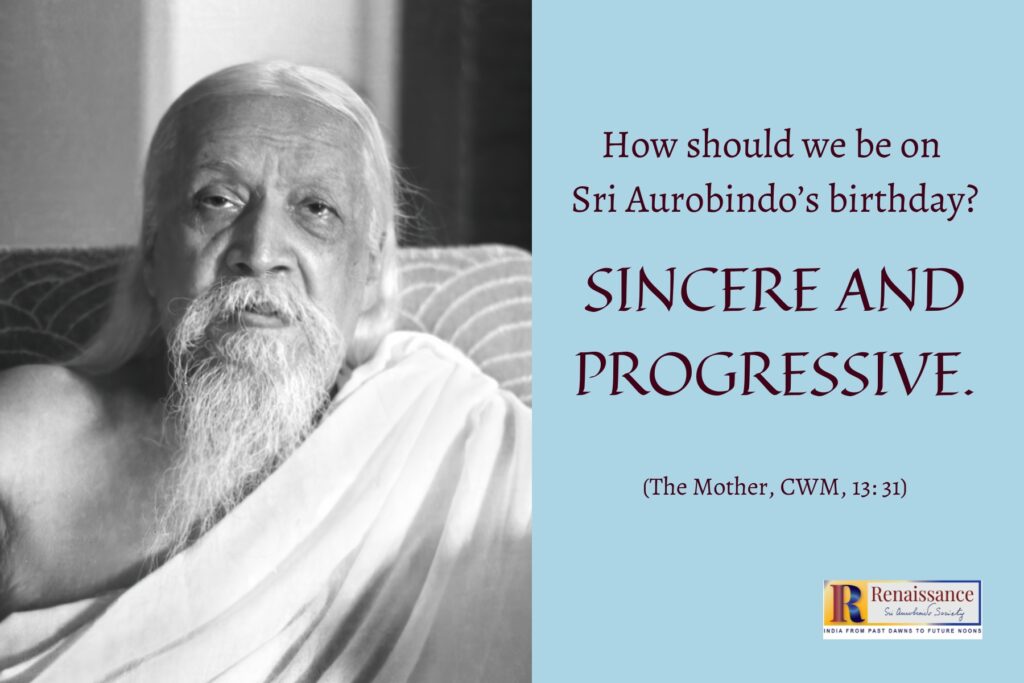
This special issue opens a year-long celebration of Sri Aurobindo’s 150th birthday and 75th anniversary of India’s political independence. Starting with this issue, the next 12 issues will explore the 12 attributes that the Mother has identified as soul-powers necessary for full manifestation of Her Work. The present issue explores Sincerity in a multi-dimensional approach. Special features on Sri Aurobindo’s work as a revolutionary nationalist are also included.
“All That is True and Sincere Will Always be Kept” Read More »

We feature a special essay by Sri Aurobindo from Bande Mataram in which he writes about the birth and growth of Indian nationalism invoking the advent and avatāric work of Sri Krishna. The selection of this piece is most appropriate since this month we also celebrate Krishna Janmashtami.
The Life of Nationalism: When Sri Aurobindo Invoked Sri Krishna Read More »
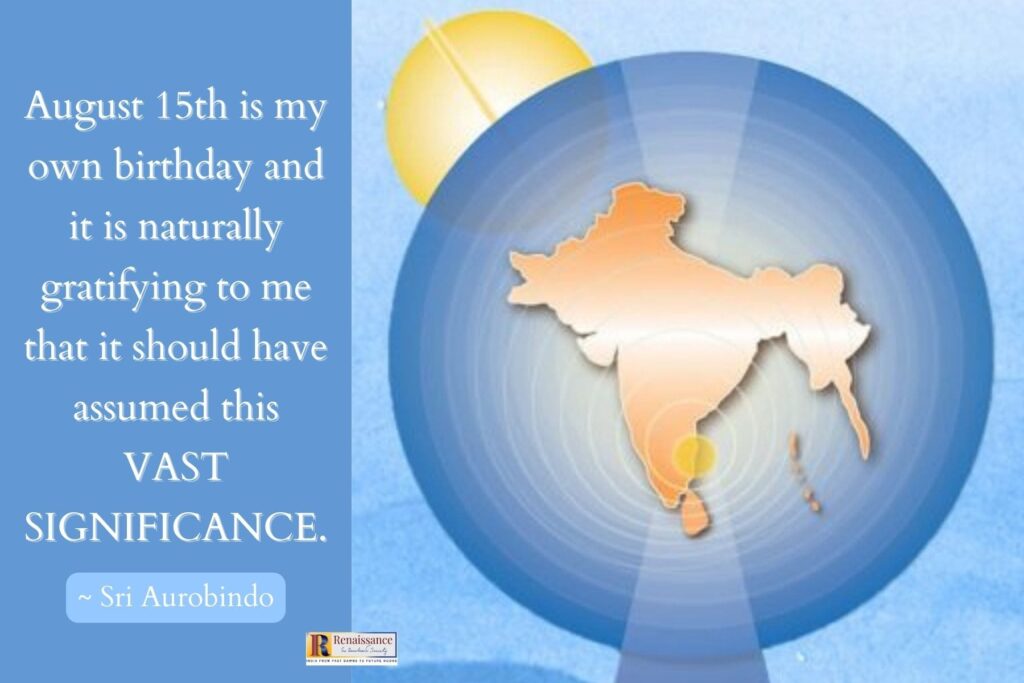
This three-part essay was first published on August 15, 1950 in Mother India. It presents a remarkable overview of various world-forces that were at play around the time of India’s independence, and highlights the significance of the date August 15, heralding a new direction for the world and humanity.
August 15: Its World-Significance (Part 1) Read More »
In this part, we learn the inner meaning of why August 15, a date of momentous implications for the values of civilisation has been chosen by India to celebrate her independence. Amal Kiran reminds us that behind the conscious thought of individuals there is the working of that invisible yet potent being which is the national soul or genius.
August 15: Its World-Significance (Part 2) Read More »